
A resident gives notice, the move-out inspection is scheduled, and everyone shifts into turnover mode. It happens every day in multifamily, so it's easy to think of it as business as usual.
But every move-out comes with a price tag that's much larger than a month of lost rent.
A vacancy sets off a chain reaction of costs: maintenance, make-ready work, marketing, leasing labor, concessions, utilities, and the hidden hours your team spends getting the apartment ready for its next resident. By the time a new lease is signed, that "routine" turnover can cost thousands of dollars—and if it happens repeatedly, it quietly chips away at your property's profitability.
The good news? Most of those costs are preventable. Understanding where turnover expenses come from is the first step toward reducing them.
Vacancy Is Just the Beginning
When people think about turnover, they usually focus on the obvious loss: rent.
If a unit renting for $1,800 sits vacant for a month, that's $1,800 in lost revenue. Simple enough.
Except the apartment isn't sitting idle. While it's empty, your team is coordinating inspections, scheduling vendors, answering prospect inquiries, conducting tours, updating listings, processing applications, and preparing the new resident for move-in.
Meanwhile, ownership is still paying many of the same fixed expenses, including utilities, insurance, taxes, and payroll.
By the time the apartment is occupied again, the true cost of that vacancy often lands somewhere between $3,500 and $6,000—sometimes even more depending on the condition of the unit and the local market.
That's why resident retention isn't just a resident experience initiative. It's a financial strategy.
Where the Money Goes
Turnover costs aren't concentrated in one budget line. They're spread across departments, making it easy to underestimate what each move-out really costs.
Lost Rent
Every day a unit sits vacant is revenue you can't recover.
Even a well-managed turnover usually means several weeks without rental income while the apartment is cleaned, repaired, marketed, and leased again. If the vacancy stretches longer because of maintenance delays or a slower leasing season, those losses add up quickly.
Make-Ready and Maintenance
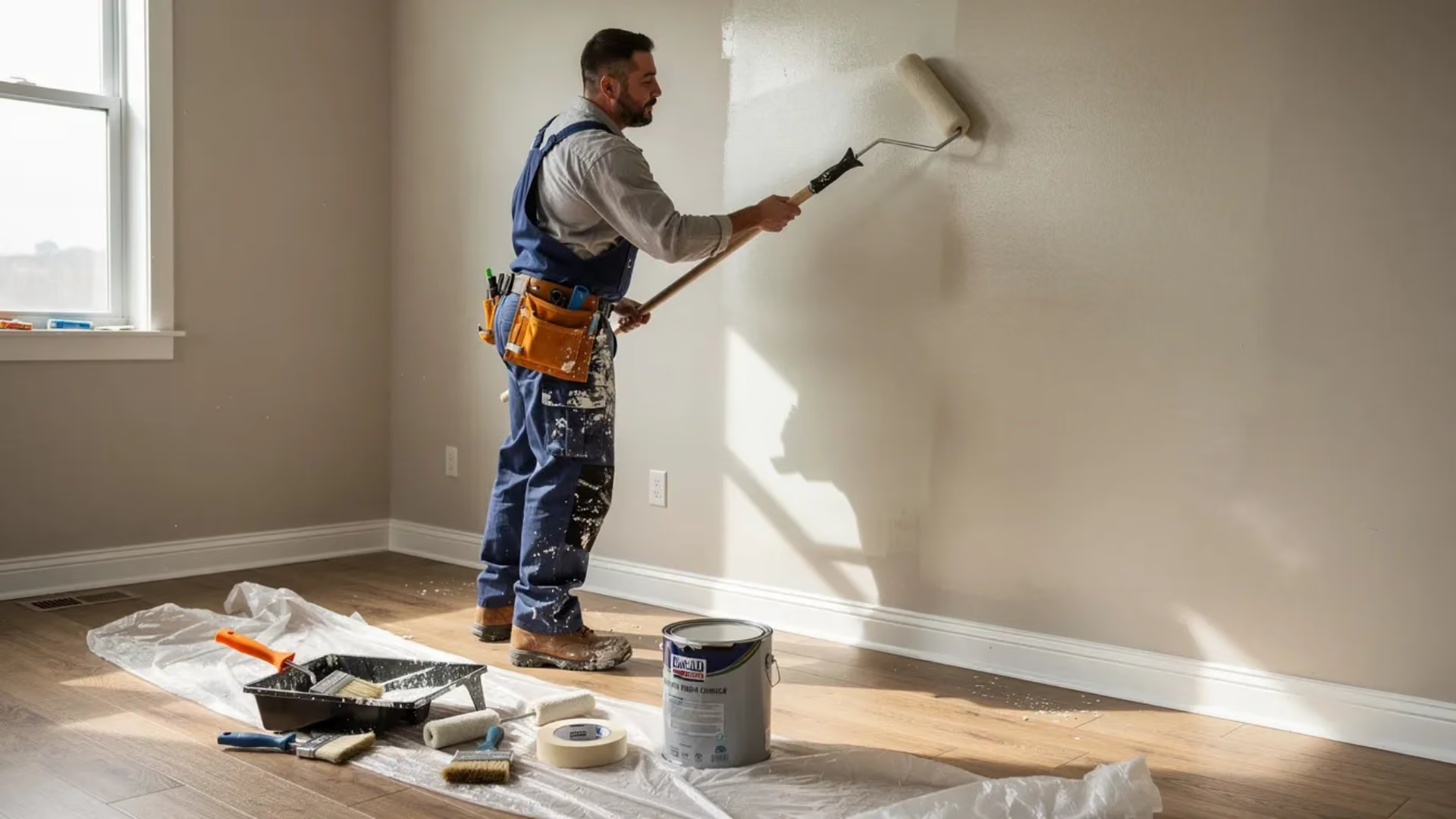
Some apartments need little more than a deep clean. Others require paint, flooring repairs, appliance replacements, drywall work, or lock changes before they're ready for a new resident.
These expenses are expected—but they're still expensive.
The longer repairs take, the longer the apartment remains unavailable, increasing both maintenance costs and lost revenue at the same time.
Marketing and Leasing
Once the apartment is ready, someone still has to fill it.
That means updating photos, refreshing online listings, responding to inquiries, scheduling tours, screening applicants, preparing lease documents, and coordinating move-in.
None of these tasks are free. Even when your marketing budget stays the same, your team's time is one of the largest hidden costs of every turnover.
Concessions
Competitive markets often require incentives to attract new residents.
Offering a free month's parking, waiving administrative fees, or discounting rent can help lease a unit faster, but those concessions reduce revenue and increase the total cost of replacing a resident.
The Costs You Don't Always See
The biggest turnover expenses aren't always the ones that appear on an invoice.
Every move-out creates dozens of small operational tasks that pull your team away from other priorities.
Property managers coordinate vendors. Maintenance teams juggle changing schedules. Leasing consultants spend hours following up with prospects instead of building relationships with current residents. Community managers handle inspections, deposits, and resident communications.
Individually, these tasks don't seem significant.
Collectively, they consume valuable time that could be spent improving the resident experience, increasing renewals, or solving problems before they lead to another notice to vacate.
That's why turnover often feels expensive even when the budget doesn't immediately show it.
Small Increases Become Big Losses
Now imagine those costs multiplied across an entire community.
Suppose two similar 50-unit properties each average $1,800 in monthly rent.
One community maintains a healthy turnover rate and experiences 18 move-outs during the year.
The other has 28.
If each turnover costs roughly $4,000, that's more than $40,000 in additional annual expenses simply from having ten more vacancies.
Those aren't just accounting numbers.
That money could have funded property improvements, amenity upgrades, additional staff training, or resident events. Instead, it's spent replacing residents who already knew the community.
Over time, repeated turnover also affects Net Operating Income (NOI), which directly influences property value. Small improvements in retention don't just improve occupancy—they strengthen the long-term financial performance of the asset.
Retention Usually Costs Less Than Replacement
Here's the encouraging part: keeping a resident is almost always less expensive than replacing one.
Most residents don't decide to move because of a single bad interaction. More often, it's the accumulation of small frustrations—maintenance requests that take too long, unclear communication, unexpected rent increases, or feeling disconnected from the community.
Addressing those issues early costs far less than starting the leasing process all over again.
A proactive renewal conversation, a quick maintenance response, or a small renewal incentive may only cost a few hundred dollars. Compare that to several thousand dollars in turnover expenses, and the math becomes clear.
Retention isn't simply about avoiding vacancies. It's about protecting revenue.
Practical Ways to Reduce Turnover
No property can eliminate move-outs completely. Life changes happen, and some residents will always relocate.
But communities that consistently outperform their peers tend to focus on the same fundamentals.
Start renewal conversations early. Waiting until the last minute gives residents more time to shop around. Beginning renewal discussions 90 to 120 days before lease expiration creates opportunities to answer questions and address concerns before they become notices to vacate.
Respond quickly to maintenance requests. Residents remember how problems are handled. Fast communication—even if the repair takes additional time—helps build trust and confidence.
Set expectations from day one. Clear communication during move-in helps residents understand community policies, available services, and where to go when they need help.
Make it easy to stay. Renewal incentives don't have to be extravagant. Professional carpet cleaning, a small gift card, reserved parking, or a modest appliance upgrade often delivers a much better return than paying for another vacancy.
Measure the full cost of turnover. Don't stop at maintenance invoices. Include lost rent, staff time, marketing expenses, concessions, and vacancy days. Once you see the complete picture, retention investments become much easier to justify.
Every Renewal Protects Your Bottom Line
Turnover is inevitable.
Expensive turnover doesn't have to be.
Every resident who renews instead of moving out saves your team time, reduces operational disruption, protects occupancy, and preserves revenue. Across an entire portfolio, those savings compound into stronger NOI, healthier communities, and better long-term performance.
The next time a vacancy occurs, don't just ask how quickly you can fill the unit.
Ask what could have prevented the vacancy in the first place.
That question is often worth thousands of dollars.
-1920x1080.jpg)

-1920x1080.jpg)