Most renters don't spend much time calculating the value of their technology, until something goes wrong. We tend to remember the promotional discount we got three years ago, not what it actually costs to step into a store and buy a replacement today.
Here is a practical look at what you’d really pay to replace your devices right now, how repairs stack up against replacements, and how blending renters insurance with dedicated device protection keeps a bad afternoon from spiraling into a financial hit.

The True Cost of Your Digital Inventory
Imagine stepping away from your coffee shop table for thirty seconds, only to return and find your backpack missing. Inside was your laptop, tablet, noise-canceling headphones, and e-reader. In half a minute, you're looking at a $2,000+ bill just to get back to baseline.
Try running a quick inventory of what you own:
- Smartphone
- Laptop and desktop setups
- Tablet and e-reader
- Smartwatch and fitness trackers
- Wireless earbuds / headphones
- Gaming consoles, extra controllers, and digital libraries
- TV, streaming boxes, and smart home hubs
When you total those items up, the average renter is carrying $3,000 to $6,000 in technology. Beyond the sheer dollar value, losing these items disrupts your daily routine, work projects, banking access, and two-factor authentication.
Sticker Shock: Replacement Benchmarks
If you had to replace your setup today at full retail price, here is roughly what you'd be looking at across common tech categories:
- Smartphones: Entry-level to mid-range models cost between $300 and $800, while premium flagship phones range from $900 to over $1,300.
- Laptops: Basic productivity laptops cost $400 to $800, but high-performance work or creative machines run $1,200 to $2,000+.
- Tablets: Standard tablets sit between $250 and $500, with high-end pro models climbing from $600 to $1,000+.
- Gaming Consoles: Popular consoles run $300 to $500 for basic setups or $500 to $650 for top-tier systems, plus roughly $70 for each extra controller.
- Audio & Wearables: Mid-tier smartwatches and wireless earbuds range from $150 to $300, while premium noise-canceling headphones and advanced watches land between $350 and $500+.
Phone Repairs vs. Full Replacement
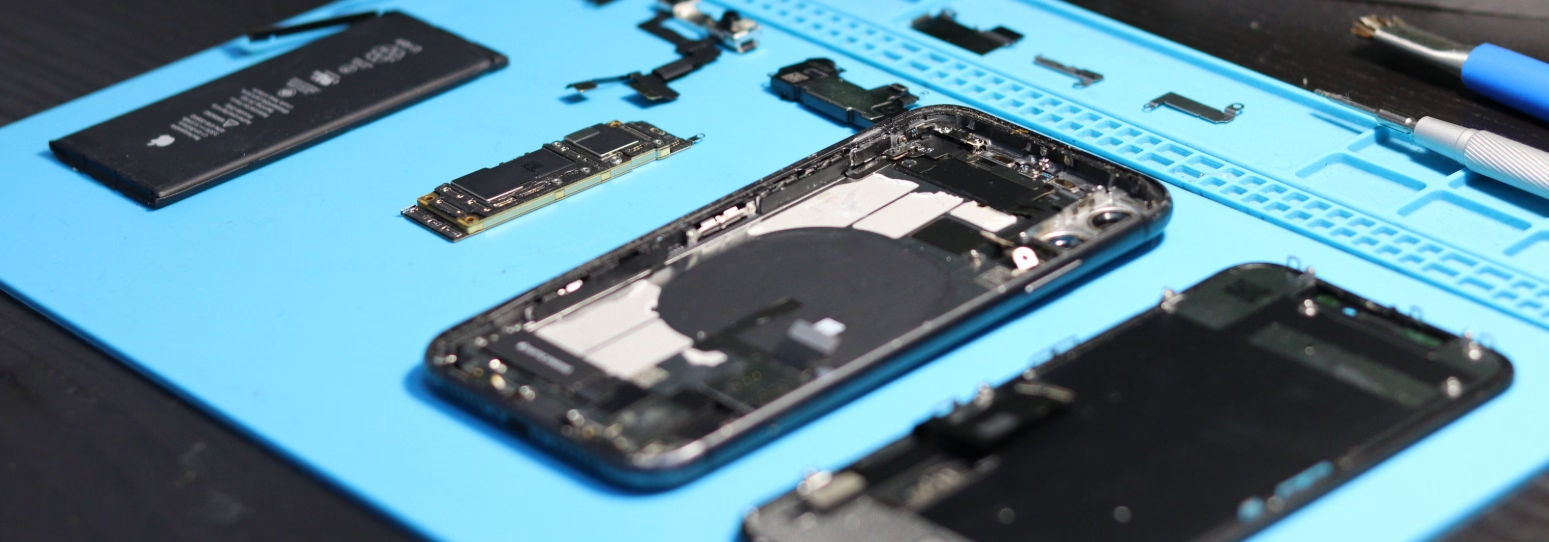
"I'll just get it fixed" is a comforting thought, right up until you see the repair estimate. Modern devices are sealed tight, engineered precisely, and expensive to open up.
Typical out-of-warranty repair costs can quickly add up:
- Cracked Screen Fix: $150 to $400+ depending on the brand and model.
- Battery Replacement: $70 to $150 for standard mobile devices.
- Keyboard or Trackpad Repair: $150 to $300 for modern laptops.
- Motherboard or Water Damage: Often exceeds the actual replacement value of the machine.
The 30% Rule: If a single repair costs more than 25% to 30% of what the device is currently worth on the market—or if the device is more than three years old—investing that money toward a replacement is usually the wiser financial move.
Keep in mind that standard manufacturer warranties generally only cover factory defects, leaving drops, spills, and cracked screens entirely on you.
How Device Insurance and Renters Insurance Work Together
To build a proper safety net, it helps to understand how different types of coverage complement each other. They aren't mutually exclusive—they simply fulfill distinct roles in protecting your property.
Renters Insurance (The Broad Shield)
- What it covers: Major structural disasters, fires, power surges, and theft—even if your laptop is stolen out of your car or from a coffee shop while traveling.
- What it misses: Everyday accidents. If you knock a glass of water onto your keyboard or drop your phone on the sidewalk, standard renters policies won't cover it.
- Cost: Generally $10 to $25 per month for full personal property protection across your whole apartment.
Device Protection Plans
- What it covers: Drops, liquid spills, cracked screens, and mechanical failures outside warranty. Many carrier or manufacturer plans also offer overnight device replacement and low-deductible screen repairs.
- What it misses: Intentional damage, cosmetic wear-and-tear, or lost items on basic tiers (unless theft/loss add-ons are included).
- Cost: Typically $6 to $25 per month per device, depending on the hardware tier and deductible options.
Building Your Simple "Tech Safety Net"
You don't need to overcomplicate this. Protecting your gear comes down to four manageable steps:
- Take an Inventory: Spend 15 minutes listing your high-value gear. Note serial numbers, find current replacement costs, and save receipts or digital invoices in a dedicated cloud folder.
- Lock Down Backups: Set up automatic cloud backups and multi-factor authentication. Replacing a $1,000 laptop is annoying; losing years of unbacked-up family photos or critical work projects is permanent.
- Combine Coverage Intentionally: Use renters insurance to cover worst-case scenarios (theft, fire) across everything you own. Then, add standalone device protection for the one or two high-value items you rely on daily and carry everywhere—usually your smartphone and main laptop.
- Maintain a Micro-Emergency Buffer: Aim to keep $300–$500 set aside in savings specifically for insurance deductibles or quick repairs.
Knowing what your tech is worth—and having a plan if it breaks—turns an unexpected incident from a crisis into a minor inconvenience.
Learn more about Homebody Device Insurance
Replacing everyday tech like smartphones ($800–$1,300) and laptops ($900–$1,500) is far costlier than most renters expect, and repairs often aren't worth it if they exceed 30% of the device's value. Because standard renters insurance only covers big events like theft or fire, pairing it with targeted device insurance for drops and spills ensures your primary gear is fully protected. Simply catalog your tech, enable cloud backups, stack your coverage intentionally, and set aside $300–$500 for deductibles to keep unexpected accidents from becoming financial setbacks.