As digital intrusion tools get more sophisticated, identity theft protection isn't optional anymore. Here's how it actually happens, what to do about it, and where to turn if it already has.
What counts as identity theft
Identity theft is any situation where your personal information — a Social Security number, driver's license, credit card details, account numbers, or things like your date of birth and security question answers — gets used without your permission, usually for financial gain. Recovering from it means more than just losing access to money: proving your identity, closing accounts, replacing cards, and untangling whatever the thief did in your name.
How Can Identity Theft Occur?
With so much personal information spread throughout the Internet in the modern age, there are many different ways in which identity theft can occur to anybody. Here are a few examples.
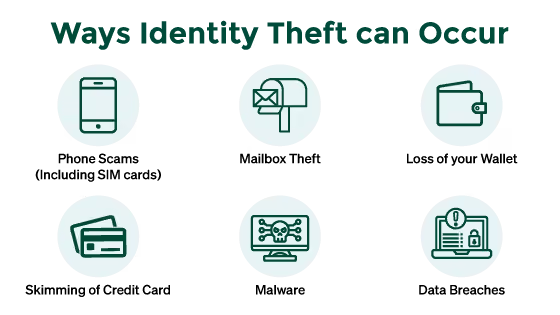
A lost wallet. Your license, Social Security card, and cards all in one place is a lot to lose at once. Skip carrying your Social Security card unless you specifically need it that day.
Mailbox theft. Tax documents, bank statements, and pre-approved offers sitting in an unlocked mailbox are an easy target.
Data breaches. Sometimes the failure isn't yours — a company or bank you trust gets breached, and your information goes with everyone else's. The 2017 Equifax breach, which exposed data on roughly 147 million Americans, is the textbook example.
SIM swaps. If someone convinces your carrier to move your number to their device, they intercept your calls and texts, including any security codes sent that way. A PIN on your cellular account, or using an authenticator app instead of text messages for sensitive accounts, helps close this gap.
Card skimming. A hidden device reads your card at a compromised ATM or payment terminal. Chip cards are harder to skim than magnetic stripe swipes.
Phone scams. Someone calls claiming to be a government agent or bank representative and asks for personal information. Never give out sensitive details on a call you didn't initiate.
Malware. A compromised website or infected download can quietly hand over whatever personal data lives on your device.
Building your protection plan
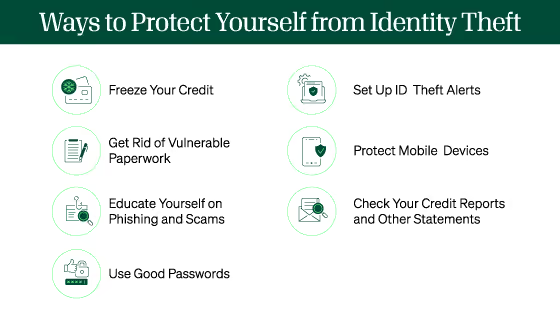
Freeze your credit. If you suspect your identity is compromised, contact Equifax, Experian, and TransUnion (each requires a separate request) and freeze your credit. This blocks new accounts from being opened using your report. One thing worth being precise about: a freeze doesn't change your credit score or affect your existing accounts — your current cards and loans keep working and reporting normally. It's free, and you can lift it temporarily whenever you need to apply for new credit yourself.
Get rid of vulnerable paperwork. Old bank statements, credit card offers, and lender notices are all worth shredding before disposal, whether they're at home or in an office. Switching to paperless statements removes the paper trail entirely.
Learn to spot phishing. Watch for emails from misspelled or unfamiliar addresses, senders using oddly familiar language, or direct requests for personal information. Don't open or click anything from a sender you don't recognize. If you run a business, this is worth training employees on too, since one compromised inbox can expose customer data along with your own.
Use strong, unique passwords. A mix of upper and lowercase letters, numbers, and symbols is the baseline, but uniqueness matters just as much as strength — a password reused across accounts means one breach compromises all of them. A password manager makes unique passwords realistic to maintain.
Turn on account alerts. Many banks, credit unions, and antivirus or protection services offer alerts for unusual activity, like a transaction from an unexpected location. These don't prevent theft, but they shrink the window between something going wrong and you finding out.
Protect your mobile devices. A stolen or hacked phone can expose everything from banking apps to your email and texts. Use a passcode or biometric lock, install mobile antivirus protection (not just on your computer), and be cautious about what you download.
Check your credit reports and statements regularly. Free weekly credit reports from all three bureaus are now permanent, not just an annual option — pull them at AnnualCreditReport.com. If you spot an account you didn't open, dispute it directly with the bureau; correcting it protects both your identity and your score.
No plan is airtight, and that's okay
Even doing everything right doesn't guarantee full protection — a breach at a company you trusted your information to is outside your control. That's not a reason to skip the steps above; it's the reason identity theft protection services exist as a backstop.
What identity theft protection services actually add
These services (often sold alongside antivirus software, from companies like Norton or McAfee) don't prevent theft on their own, but they add a few concrete things: faster monitoring and alerts if your information shows up somewhere it shouldn't (including the dark web), hands-on recovery help (contacting agencies, drafting dispute letters, requesting credit freezes on your behalf), and in many plans, reimbursement insurance if you lose money directly to fraud. For most people, pairing one of these with the habits above is a reasonable way to cover the gap between "doing everything right" and "still not 100% protected" — though it supplements good habits rather than replacing them.
If it happens anyway: how to report it
- File a report at IdentityTheft.gov. The FTC runs this site, and it walks you through a personalized recovery plan. Many identity theft insurance policies require this report to process a claim.
- Contact your local police, especially if the theft involved a physical crime like a stolen wallet or mail theft.
- Notify the credit bureaus and, if mail was involved, the Postal Inspection Service.
- Call the IRS Identity Protection Specialized Unit at 800-908-4490 if you suspect tax-related identity theft.
- Contact your card issuers immediately to cancel anything compromised. A replacement card is typically a quick process from there.
Be as specific as possible with every organization you contact — dates, amounts, and account numbers help them act faster.
Bottom line
Build a plan before you need one: know what steps to take, who to call, and where your credit is frozen or unfrozen. Combine good daily habits with a credit freeze and, if it fits your risk tolerance, a paid protection service, and you're about as covered as anyone reasonably can be.
Learn more about Homebody ID theft protection.
Identity theft can happen to anyone. Taking the extra steps today to protect yourself will save you both time and money should your identity be compromised. Learn how to prevent and handle losing your wallet, mail theft, data breaches, and more with a proper ID theft protection service and practical daily lifestyle changes.