Your electric bill doesn't have to creep up every summer and winter. A few habit changes and small upgrades add up to real, ongoing savings without a major renovation.
Rethink Your Thermostat Habits
Lowering the temperature 7-10°F while you're out or asleep can meaningfully cut heating and cooling costs, especially with central heat or air. A smart thermostat automates this so you're not relying on remembering to adjust it every time you leave. If you want a fuller picture of where your apartment is losing energy, ask your utility company about a free or low-cost home energy audit — many offer one.
Use Ceiling Fans and Natural Ventilation
A ceiling fan lets you set the thermostat a few degrees higher in summer while still feeling just as cool, since moving air makes a room feel cooler than the actual temperature. On cooler days or in the evening, opening windows instead of running the AC cuts electricity use for free.
Keep Up With HVAC Maintenance
Replace filters regularly and get an annual checkup if your lease allows it — a poorly maintained system works harder (and costs more) to do the same job, and neglect increases the odds of a mid-season breakdown. Good insulation also makes your entire system more efficient, so ask your landlord about weatherstripping or draft sealing if you notice drafts around doors and windows.
Switch to LED Bulbs
LEDs use significantly less energy than incandescent bulbs and last far longer, so the upfront cost pays for itself in lower electricity use alone. Rely on natural daylight during the day where you can, and consider dimmer switches or smart lighting for rooms where you don't need full brightness — both cut consumption while still giving you the ambiance you want.
Add Motion Sensor Lighting
Motion sensors in spaces you don't spend much time in — hallways, closets, bathrooms — make sure lights aren't running when no one's actually there. It's a small, mostly "set it and forget it" upgrade.
Adjust Your Water Heater
The Department of Energy recommends setting your water heater to 120°F. It's hot enough for daily use, reduces scald risk (water at 140°F can cause a third-degree burn in about five seconds), and helps prevent bacterial growth like Legionella. Turning it down from a typical factory default of 140°F can cut water-heating costs by 6-10%, saving the average household $36-$61 a year (Department of Energy). Washing laundry in cold water instead of hot or warm cuts your water heater's workload further.
Unplug Devices You're Not Using
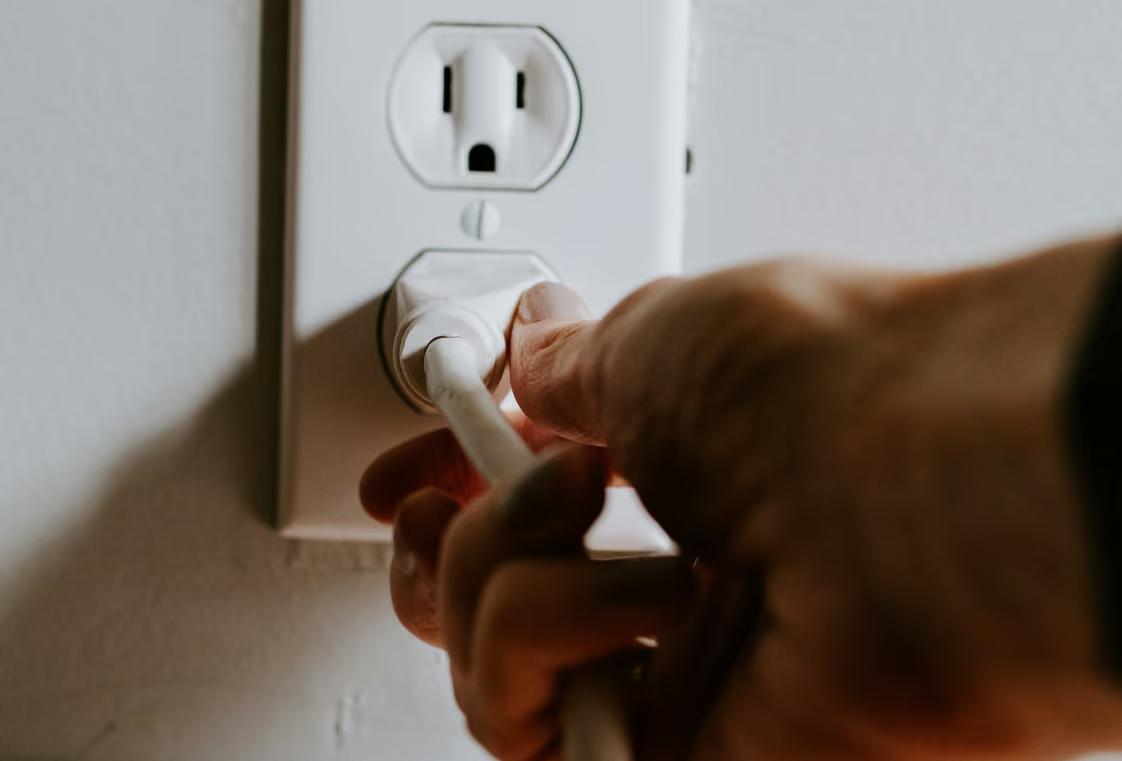
Many devices draw power even when switched off — the Department of Energy estimates this "phantom load" accounts for 5-10% of total residential electricity use, up to about $183 a year for an average household (DOE). A smart power strip that cuts power to multiple devices at once (game consoles, chargers, entertainment centers) is an easy way to handle this without unplugging everything by hand every day.
Choose Energy-Efficient Appliances
Smaller appliances like a toaster oven or slow cooker use less energy than a full oven for the same job, and they don't heat up the kitchen (and by extension, don't make your AC work harder). When you're buying anything new, an Energy Star rating is the quickest way to confirm you're getting an efficient model rather than guessing.
Run Full Loads, and Air-Dry When You Can
Only run the dishwasher or washing machine with a full load — half-loads use nearly the same energy and water for less actual cleaning done per cycle. Air-drying dishes or clothes when you have the time and space skips a heating cycle entirely.
Ask Your Utility Company Directly
Many utilities offer energy-saving programs, rebates on efficient appliances or smart thermostats, or time-of-use discounts that aren't advertised prominently. A quick call or a look at their website can turn up savings you wouldn't find otherwise.
By implementing these tips, not only will you see a reduction in your energy bills, but you’ll also contribute to a greener environment. Remember, every little change adds up. Start with one or two tips and gradually incorporate more into your routine. Your wallet and the planet will thank you.