Jewelry carries more than a price tag — it's tied to milestones, people, and memories. Insuring it is one of the more affordable ways to protect all of that. Here's what it actually costs. (If you want the mechanics of how coverage works, we cover that in How does jewelry insurance work?)
This is general information, not personalized financial advice. Talk with a licensed agent about your specific policy.
What does jewelry insurance cost?
Standalone jewelry insurance typically runs 1% to 2% of the item's appraised value per year, though rates as low as 0.5% or as high as 3% aren't unusual depending on the insurer and your location (BriteCo).
A quick way to estimate your own premium, using that 1%–2% range:
- A $3,000 ring: roughly $30–$60 a year
- A $5,000 piece: roughly $50–$100 a year
- A $7,000 ring: roughly $70–$140 a year
For context, that's often less than a single streaming subscription costs per year — a small price against the cost of replacing a piece out of pocket.
Actual cost depends on a handful of factors: the type of jewelry, whether it's vintage or one-of-a-kind, your location, the deductible you choose (lower deductible, higher premium, and vice versa), and which insurer you go with.
Getting covered is fast
Applying for jewelry insurance typically takes about 10 minutes online, and coverage usually starts almost immediately after you're approved. No lengthy underwriting process, no waiting weeks to be protected.
Picking a jewelry insurance company
With plenty of providers to choose from, it's worth going with one that specializes in jewelry rather than a generalist. Ask directly about coverage limits, how claims get processed, and whether the policy pays actual cash value or replacement cost — that distinction changes your payout more than almost anything else, since jewelry doesn't depreciate the way most insured property does.
How this fits with homeowners or renters insurance
Most homeowners and renters policies include some jewelry coverage, but with tight limits — often too tight for an engagement ring or a real collection. If your jewelry's value outpaces those limits, a standalone jewelry policy or a scheduled personal property endorsement fills the gap.
What's actually covered
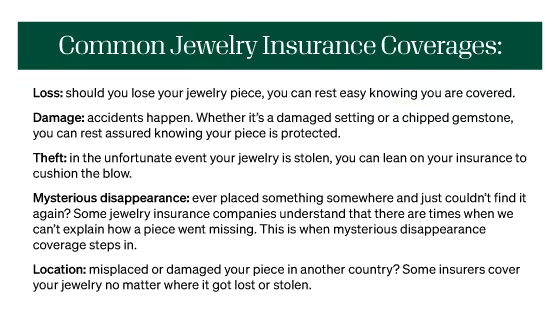
Most jewelry insurance policies cover:
- Loss — misplaced it and it's gone for good
- Damage — a cracked gemstone, a broken clasp, a house fire
- Theft
- Mysterious disappearance — when something goes missing with no explanation at all, which standard homeowners policies typically exclude but dedicated jewelry policies often include
- Coverage anywhere — many policies protect your jewelry regardless of where in the world it's lost, damaged, or stolen
Coverage specifics vary enough between insurers that it's worth comparing more than one quote before you commit.
Appraisals matter
Insurers will want an appraisal or detailed receipt before covering a piece. It sets a clear value baseline for both sides, and it makes any future claim faster and less contentious.
Beyond insurance
Jewelry insurance is one piece of a bigger picture. A safe deposit box adds real physical security for your most valuable pieces beyond home storage. Warranties and service plans (regular cleanings, prong checks) keep jewelry in good shape and can prevent a claim before it's ever needed. And resources like the Insurance Information Institute are useful if you want to go deeper on how insurance markets and pricing actually work.
Bottom line
Whether you're insuring a $3,000 ring or a $7,000 heirloom, the math stays simple: roughly 1-2% of the item's value per year, fast to set up, and cheap relative to what you'd lose without it.
Jewelry insurance makes sure you're covered if your jewelry is lost, stolen, or damaged. While you can't put a price tag on peace of mind, you do need to know how much it costs to protect your valuables. We'll explain everything from premium costs, to different types of coverage, to help you decide what's best for you.

.avif)