
If this is your first time renting, renters insurance is probably one more line item you weren't expecting. Here's what it actually costs, what that cost gets you, and what pushes it up or down.
This is general information, not personalized insurance advice. Talk with a licensed agent about the right coverage for your situation.
What does a renters insurance policy actually cover?
A renters insurance policy protects you against property loss, property damage, and certain liability costs tied to your rental. Three core pieces:
- Personal property coverage reimburses you if your belongings are stolen or damaged — say, a break-in where your TV gets taken.
- Personal liability coverage covers medical costs and legal fees if a guest is injured in your apartment and you're found responsible.
- Additional living expenses coverage pays for a hotel and related costs if your apartment becomes temporarily unlivable, like after a flood.
What's covered and what it costs varies by policy, but for the price, it's one of the better insurance values available, especially if you're renting somewhere with any real risk of theft or weather damage.
What does renters insurance cost?
Renters insurance typically runs $9 to $29 a month depending on where you live and how much coverage you choose, with a national average landing around $15 a month for a standard policy — about $20,000 in personal property coverage and $100,000 in liability (MoneyGeek). For most renters, that's a small add-on next to rent itself.
What that payment actually buys
- Personal property losses, including theft or fire damage — covers repair or replacement costs minus your deductible.
- Liability damages and legal costs if someone's hurt in your rental. This usually extends to dog bites too, though some insurers exclude certain breeds.
Many policies also let you add coverage for things like earthquake damage for an extra premium.
Coverage only kicks in once you've met your deductible. For example: you lose $1,000 worth of property to theft, and your deductible is $500. You cover the first $500, and the insurer covers the remaining $500.

What affects your renters insurance rate
Your state
State is one of the biggest cost drivers, largely due to theft rates, population density, and natural disaster exposure. As of 2026, the priciest states tend to be Louisiana (around $29/month), Mississippi (around $27/month), Florida (around $24/month), and Alabama (around $21/month) — mostly a reflection of hurricane and severe weather risk. The most affordable tend to be Wyoming (around $9/month), Wisconsin (around $9/month), North Dakota, and Iowa (both around $10/month).
Your specific location
Even within a state, city and neighborhood matter. Metro areas generally see higher premiums due to higher theft and burglary rates, and any area with above-average crime or disaster risk pushes rates up further. If a quote seems high, it's worth asking your landlord or insurer directly whether recent break-ins or claims in the building are a factor — that's useful information either way.
Your insurance provider
Rates vary by company, and your landlord may require you to buy through a specific provider or program. If you'd rather use an insurer you already have a good relationship with, ask — some landlords will allow it, others won't, but it costs nothing to ask.
Your claims history
Filing a claim generally raises your premium for a while afterward, similar to how a car insurance premium spikes after an at-fault accident — the cost typically eases back down over the following years if you don't file again.
Your coverage needs
Standard personal property coverage protects everyday items like furniture and clothing, but it typically doesn't fully cover high-value items like fine art or jewelry. If you own things worth more than your policy's standard limits, you'll need to add coverage for them specifically, which raises your monthly cost a bit. Take stock of what you actually own and what you'd realistically lose before deciding how much extra coverage makes sense.
Your coverage type
Replacement cost coverage pays what it costs to replace a lost item today, with no deduction for depreciation — more protection, higher premium. Actual cash value coverage pays the depreciated value of the item, which is often less than what it'd cost to replace, but comes with a lower premium.
Your deductible
Higher deductible, lower monthly premium, and vice versa — you're trading a lower recurring cost for more risk if you actually file a claim. Decide what you could comfortably cover out of pocket in a real loss, then pick your deductible from there.
Ways to lower the cost
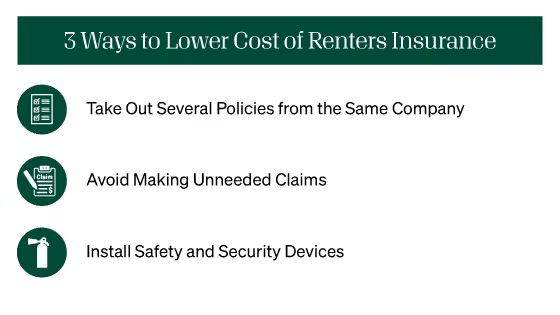
Bundle policies with one insurer. Many companies offer meaningful discounts for carrying renters, auto, and other policies together.
Skip claims that won't clear your deductible. If you lose $200 worth of property and your deductible is $500, filing a claim gets you nothing and still counts against your claims history. Unlike a car accident, you're not legally required to report a break-in unless someone's injured, so use judgment about whether a claim is actually worth filing.
Add safety devices. Smoke alarms, sprinklers, and burglar alarms often qualify you for a discount, since they lower the insurer's risk.
Bottom line
Most renters insurance policies run under $20 a month and often get folded into your regular rent and utility payments. Ask your landlord upfront whether it's required and what they expect you to pay, budget for it accordingly, and you're covered for a lot more than the monthly cost suggests.
Renters insurance costs vary based on a variety of factors such as your state of residency, rental location, the insurance provider, and prior claims. You can maintain your costs by bundling insurance policies with one provider and by preventing unnecessary claims.

.avif)