
Personal property coverage is the part of a renters insurance policy that pays to repair or replace your stuff after a fire, theft, water damage, or similar disaster. How much you need depends entirely on what you own and what it's actually worth — and most people get that number wrong. GEICO estimates that most renters underestimate the value of their belongings by 40-60% (GEICO).
This is general information, not personalized insurance advice. Talk with a licensed agent about the right coverage for your situation.
What personal property coverage actually includes
Personal property coverage protects your belongings both inside your home and, in most cases, outside it too — a laptop stolen from your car or a bag lost on vacation is often still covered. But every policy comes with limits and exclusions worth knowing before you need them, not after.
Most policies cap coverage for specific categories like jewelry, art, and electronics regardless of your overall coverage limit. Jewelry sub-limits typically run $1,000 to $2,500 per loss, and electronics are often capped around $2,000 to $5,000 per item (Policygenius). If what you own is worth more than that, the gap is real.
You'll also choose between two payout models: replacement cost coverage, which pays what it costs to buy a similar item today, and actual cash value (ACV), which factors in depreciation and pays less for older items.
Figuring out what your stuff is worth
Start by actually tallying what you own: furniture, electronics, clothing, collectibles, everything. Once you know the real number, you can pick a coverage limit that matches it instead of guessing.
Build a home inventory. List each item with a description, purchase date, and estimated value, and back it up with photos or video. This isn't just for setting your coverage — it's what makes a claim fast instead of a drawn-out argument over what you actually owned.
Use a tool instead of doing it from scratch. GEICO's Personal Property Coverage Calculator walks you through categories (furniture, electronics, jewelry, collections) to estimate a total. For an actual room-by-room inventory with photos, the National Association of Insurance Commissioners offers a free home inventory tool, and apps like Sortly, Encircle, or Allstate's Digital Locker (open to non-Allstate customers too) handle photo-based documentation with exports you can hand to an insurer after a loss.
Update your inventory after any major purchase or life change — it's only useful if it reflects what you currently own.
Choosing the right coverage amount
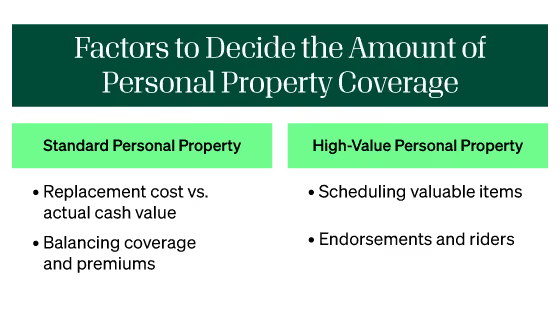
Replacement cost vs. ACV is really a tradeoff between premium and payout. Replacement cost costs more monthly but pays what it actually takes to replace an item. ACV is cheaper but can leave you short, especially on older items that have depreciated a lot. If you're stretching your budget, ACV works; if you'd rather not deal with a shortfall after a loss, replacement cost is worth the extra cost.
Shop around. Coverage limits and premiums vary enough between insurers that comparing a few quotes is worth the time before you commit.
Covering high-value items
Standard coverage limits usually aren't enough for anything genuinely valuable. Two ways to close the gap:
Scheduling items. List specific pieces — an engagement ring, a piece of art, a serious camera setup — with your insurer, who assigns each its own coverage limit based on appraised value.
Endorsements and riders. These add-ons extend coverage on categories like jewelry, art, or electronics beyond your policy's standard sub-limits.
Either way, you'll typically need an appraisal or receipt to back up the value you're claiming.
Revisit your coverage as life changes
Coverage that made sense last year might not fit now. Moving in with a partner, having a kid, or buying something expensive are all good triggers to reassess — new belongings mean new value to protect, and priorities shift (a nursery full of gear looks different from a bachelor apartment).
A once-a-year policy review is a reasonable habit regardless: read through what's actually covered, ask your insurer about anything unclear, and compare a quote or two to make sure you're still getting a fair rate for what you need.
Understanding and selecting the right amount of personal property coverage is key for making sure your stuff is protected. By figuring out the value of your belongings, considering coverage types, and choosing the level of coverage you can comfortably afford, you can choose a renters insurance policy that fits your needs.Don’t forget to adjust your coverage over time to account for major life events and conduct regular policy reviews to make sure your policy stays up-to-date. By taking these steps, you can rest easy knowing that your things are protected even during life’s unexpected twists and turns.

.avif)