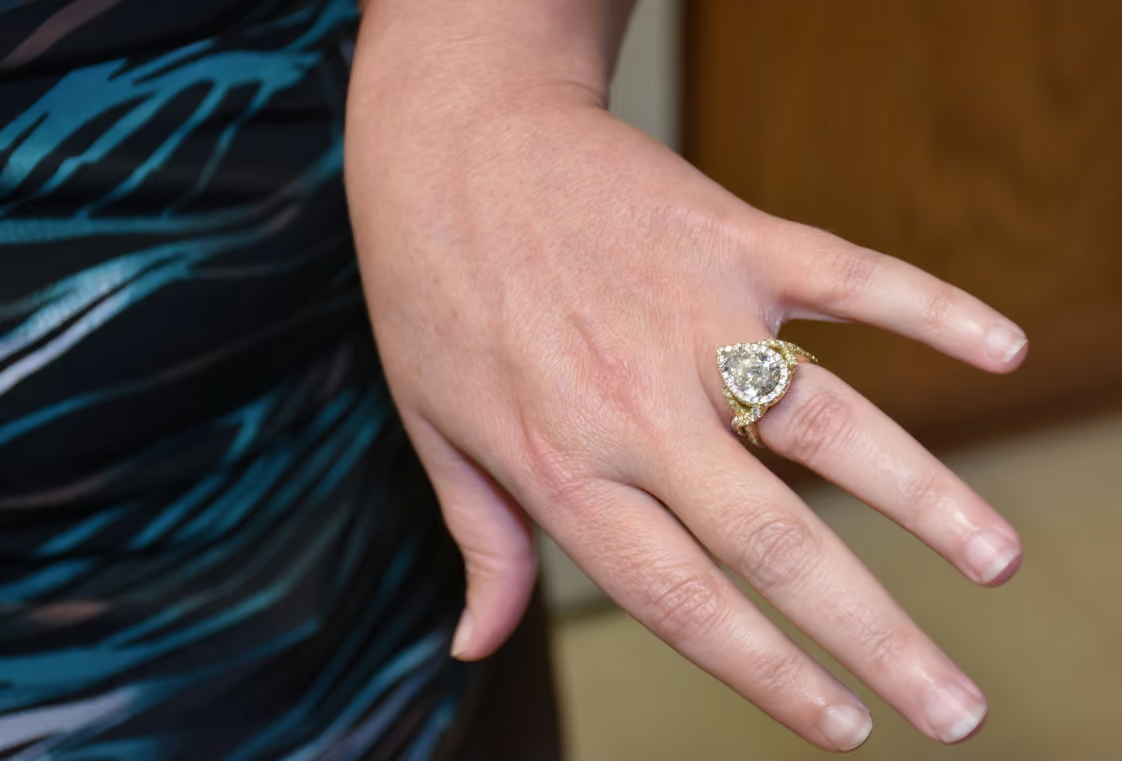
That diamond ring or heirloom necklace you're planning to insure needs a number attached to it first. Here's what a jewelry appraisal actually does, what it costs, and how to find someone qualified to do it.
This is general information, not personalized financial advice. Talk with a licensed agent about your specific policy.
What does a jewelry appraisal actually do?
Sets your coverage and your premium. Your insurer uses the appraised value to decide how much coverage you need and what you'll pay for it. Skip the appraisal and you risk overpaying for coverage you don't need, or being underinsured when it matters.
Determines what you'd get paid in a claim. If a piece is lost, stolen, or damaged, the insurer uses the appraisal to figure out your payout. The number that matters here is retail replacement value — what it would cost to buy an equivalent piece today, which is a different (and often higher) number than what you'd get selling the piece secondhand.
Documents that it's actually yours. A detailed appraisal doubles as proof of ownership, which matters if a stolen piece is ever recovered by police and you need to reclaim it.
Doubles as a checkup for the piece itself. A good appraiser will flag a loose stone, a worn setting, or other small issues while they're examining the piece, before they become bigger (and more expensive) problems.
Do you need an appraisal before you can get insured?
Not always, but it's still worth getting one. Jewelers Mutual, for example, lets most customers start coverage without submitting an appraisal upfront for items under about $5,000, where a sales receipt is usually enough. Items above that threshold typically require a professional appraisal (Jewelers Mutual).
Even when it's not required at sign-up, you'll need documentation to support a claim eventually. Getting the appraisal done upfront means you're not scrambling for it after something's already gone wrong.
Finding a qualified appraiser
Not every jeweler is a qualified appraiser, and the two skills don't always overlap. Look for someone with real gemological training, not just retail experience. A few credentials worth asking about:
- GIA Graduate Gemologist (GG) — a widely recognized baseline for gemological training, from the Gemological Institute of America.
- AGS Certified Gemologist Appraiser (CGA) — from the American Gem Society, this credential specifically covers appraisal expertise, not just gem identification, and requires annual recertification.
- Membership with the National Association of Jewelry Appraisers (NAJA) — members are expected to follow continuing education and the Uniform Standards of Professional Appraisal Practice.
Beyond credentials, do normal due diligence: check reviews, ask for references, and don't be afraid to ask about their process before committing.
What it costs
Expect to pay a flat fee per item or an hourly rate, typically somewhere between $75 and $300 depending on the piece's complexity and your location, or around $50-$150 an hour for more involved appraisals (various 2026 sources). One clear red flag: any appraiser who charges a percentage of the jewelry's value. That's a conflict of interest, since it gives them an incentive to inflate the number.
What to bring
Bring the piece itself, plus any past documentation — old appraisals, certificates, or the original sales receipt. The more history you provide, the more accurate and efficient the appraisal.
How often to update it
Get a fresh appraisal roughly every two years, or sooner if metal or gemstone prices shift significantly, if the piece has been altered, or if your insurer specifically asks for an update. Values on precious metals and stones move enough over time that an old appraisal can leave you under-covered without you realizing it.
Bottom line
An appraisal is what turns "this is valuable to me" into a number an insurer can actually work with. Get it done by someone properly credentialed, keep it current, and you'll have both accurate coverage and one less thing to worry about if the worst happens.
At a glance, your jewelry might seem like just a pretty thing that adds a touch of elegance to your style. But look a little deeper, and it’s so much more. Understanding its value through a professional appraisal goes beyond aesthetics; it’s about ensuring its protection and longevity.

.avif)