Most people know the basics: pay your bills on time. But that's not the whole strategy, and if your score isn't where you want it, there's a lot more room to move it than "just pay on time" suggests.
This is general information, not personalized financial advice. Talk with a financial advisor or credit counselor for guidance specific to your situation.
Why a good credit score matters
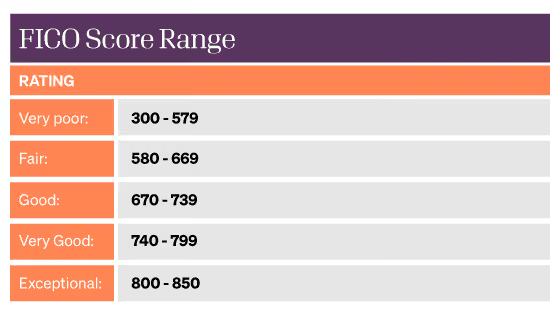
Your credit score reflects your ability to borrow and repay, and it shapes what lenders offer you. FICO tops out at 850, and "good" typically starts at 670:
- Very poor: 300-579
- Fair: 580-669
- Good: 670-739
- Very good: 740-799
- Exceptional: 800-850
Beyond loan terms and interest rates, a good score has some less obvious benefits: some employers factor credit history into hiring for finance-related roles (this varies by state, since several restrict the practice), and landlords often check credit as part of screening prospective tenants.
Strategies that actually build your score
Check your report and fix what's wrong
Pull your reports from all three bureaus and look for errors — an account that isn't yours, a payment marked late that wasn't, an incorrect balance. Dispute anything wrong directly with the bureau; most contact information is right on the report. If a creditor corrects an error on their end, follow up to make sure it actually gets reported to the bureaus — errors don't always get cleaned up automatically just because the underlying issue was fixed.
Get your credit utilization under control
This is where the biggest, fastest gains usually live. A few angles on the same lever:
- Keep balances low. Paying more than the minimum brings your balance down faster and saves you interest along the way.
- Pay strategically if you're carrying multiple balances. Tackling the highest-interest cards first saves the most money while also improving utilization.
- Ask for a higher limit. If your issuer approves it and your balances stay flat, your utilization ratio drops immediately. This only helps if you're not tempted to spend up to the new limit — if available credit has been part of the problem before, this isn't the move to start with.
- Aim for under 30% utilization. On a $2,000 total limit, that means keeping your combined balance under $600 at any given time.
Pay bills on time and settle what you owe
Payment history is the single biggest factor in your score. Automate what you can, set reminders for the rest, and prioritize clearing outstanding debts where possible — both because it directly helps your score and because it's one less thing hanging over you.
Don't close old accounts, and build a mix
Length of credit history rewards accounts you've held a long time, even ones you rarely use — closing them shortens your average account age. Separately, having a mix of credit types (a card, an installment loan, maybe a mortgage) shows lenders you can manage different kinds of credit, though it's not worth taking on debt you don't need just to diversify.
Limit new credit applications
Each application is a hard inquiry, and several in a short window signal risk to lenders. Apply only when you actually need to.
Use a credit-builder tool if you're starting thin or rebuilding
A secured credit card uses your own deposit as your credit limit, and responsible use builds a positive history over time. A credit-builder loan works similarly in reverse: you make payments into an account, and the positive payment history reports to the bureaus as you go. Both are good options if your credit file is thin or recovering from past damage.
Monitor your score regularly
Checking your report used to be limited to once a year per bureau, but free weekly access from all three (AnnualCreditReport.com) is now permanent. Many banks also show an estimated score right in your online banking portal. Regular monitoring means you catch a dip (or see an improvement) while it's still easy to act on.
Get credit for the rent you're already paying
Homebody's Rent Credit Reporting adds your on-time rent payments to your credit history for a small monthly fee. Our Deposit Alternative also swaps a large upfront deposit (often around $1,000) for a smaller monthly premium, roughly $10 a month, and renters insurance sign-up takes just a few minutes so you're covered from day one.
What actually makes up your score
- Payment history (35%): your track record of paying on time.
- Credit utilization (30%): how much of your available credit you're using.
- Length of credit history (15%): the age of your oldest and newest accounts, averaged.
- Types of credit in use (10%): your mix of cards, loans, and other credit.
- New credit (10%): how many accounts you've opened recently, and how many hard inquiries you've triggered.
How long does this actually take?
ere's no fixed timeline — it depends on what's dragging your score down in the first place. Fixing an error or paying down a balance can show results within a few weeks to a month. Bigger structural changes, like building account age or working through debt, take longer, but they're durable once they land.
Building a solid credit score is a key step towards achieving your financial goals, from borrowing money to landing your dream job. And if you’re like most people, you wish your credit score could be higher. But, how do you know where to start? We've got you covered with easy steps you can take to improve your credit score.